
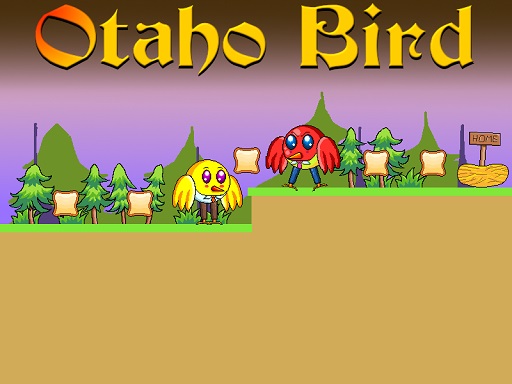
Bread Collection and Level Goals
Each level in Otaho Bird asks the same core question: can you collect every slice of bread before reaching the exit nest? The bread is scattered across a 2D layout, and the exit only opens once the last slice is grabbed. That structure turns every screen into a small routing puzzle, because the order you collect bread in affects how often you cross paths with hazards.
Hazards That Shape Your Route
Three obstacle types define the challenge. Enemy birds block your path and demand timed avoidance rather than direct confrontation. Rotating blades spin in fixed positions, so you need to read their rhythm before committing to a move. Fire hazards sit in the environment and must be steered clear of entirely. Because these threats are placed differently in each of the eight levels, memorizing a single safe path rarely works for the whole game.
Controls and Movement Feel
Otaho Bird uses a simple tap-or-press-to-fly, release-to-descend control scheme on both keyboard and touch devices. That one-button approach keeps the input barrier low, but it also means altitude management is the real skill. Short, controlled taps help you hover near a bread slice; holding too long sends you into a blade or an enemy bird. The difficulty curve leans on obstacle frequency and tighter spacing rather than new buttons to learn.
Who This Platformer Suits
With no violent content and a family-friendly tag set, Otaho Bird targets younger players and casual platformer fans who want short, readable challenges. The eight-level structure keeps sessions brief, and the escalating obstacle density gives returning players a reason to replay stages for cleaner runs. It is not a precision platformer built around complex tech; it is a timing game where patience and observation matter more than speed.
Comments
0 comments