
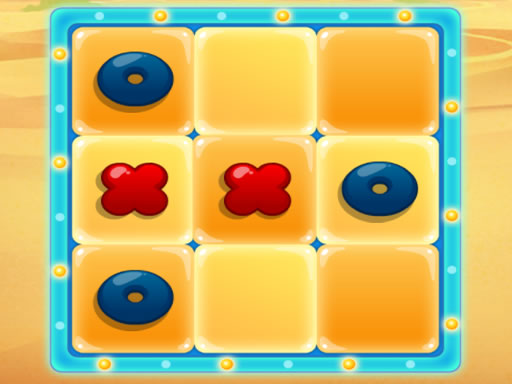
The Familiar Grid with a New Look
Arabian Nights Tic Tac Toe keeps the rules of the classic pen-and-paper game intact: two players alternate placing their symbol on an empty cell of a 3x3 grid. The first to align three symbols in a row—horizontally, vertically, or diagonally—wins. A full board without a line results in a draw. What changes here is the presentation: decorative visuals and thematic sounds replace the usual scrap paper, giving each match a distinct atmosphere.
How a Match Unfolds
Play begins with an empty grid. On each turn, a player selects an empty cell and places their symbol. Because every move is visible, the game becomes a back-and-forth of building your own line while blocking your opponent's. There are no time limits, so you can pause and consider each placement. The match ends when someone completes a line or all nine cells are filled. The interface uses touch and click controls, and the game supports two-player mode for local matches.
Decisions That Matter
The center cell offers the most ways to form a line—four possible lines pass through it—so claiming it early is often a strong opening. Corners are the next most valuable, each contributing to three potential lines. Edges are the least flexible, appearing in only two lines. Beyond position, you must watch for forks: setups that create two simultaneous threats, forcing your opponent to block one while you complete the other. Recognizing these patterns separates casual play from consistent wins.
Who This Suits
The rules take seconds to learn, making it accessible for children and adults alike. The lack of timers and the simple interface keep the experience relaxed, while the strategic depth—especially around forks and blocking—appeals to players who enjoy logic puzzles. The Arabian theme provides a cohesive visual and audio backdrop without altering the core mechanic. It is a straightforward adaptation: no extra modes, no progression systems, just the classic duel with a new skin.
Comments
0 comments