
Race Format and Objective
Every match in Rainbow Parkour Multiplayer Race pits you against other players in real time. The goal is simple: reach the end of the course before everyone else. Courses are packed with platforms, gaps, and obstacles, so raw speed alone won't win. You need to read the layout, time your jumps, and keep a steady line. Because opponents are racing alongside you, each session plays differently depending on how the group moves and where mistakes happen.
Controls and Movement
Movement uses standard keyboard inputs: forward, backward, left, and right. Jumping is the core action, used to clear gaps and climb onto platforms. There is no complex combo system or stamina meter to manage. The challenge comes from applying simple controls precisely under pressure. Beginners can start with basic jumps and short sections, then work up to trickier sequences as their timing improves.
Course Design and Skill Ceiling
Courses are built around platforms, gaps, and obstacles that demand careful timing and coordination. Different sections require different approaches: some reward a direct sprint, others punish anyone who rushes. The game leans on skill and practice rather than random chance. Learning a course layout is a real advantage, and muscle memory for tricky jumps develops over repeated runs. Watching other players can reveal more efficient routes or shortcuts you might have missed.
Visual Style and Atmosphere
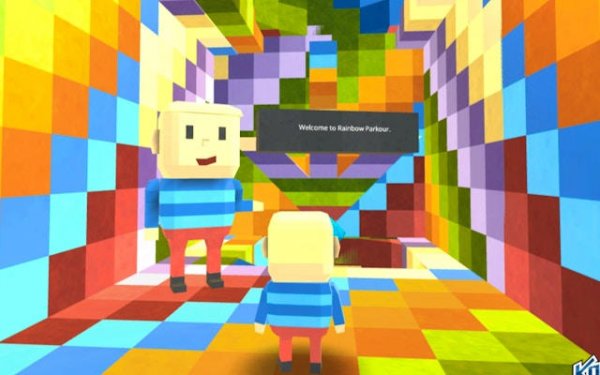
The rainbow-themed visuals give the game a bright, cheerful look that matches its light competitive tone. Colors aren't just decoration here; they help distinguish platforms and obstacles at speed. The overall presentation keeps the mood friendly rather than intense, which suits the pick-up-and-race structure. Sessions stay fresh because you're always reacting to other players, not just the course.
Who This Suits
This game fits players who enjoy fast movement and low-stakes competition. The controls are easy to learn, so new players can join a race quickly, but the timing demands leave room for skill growth. If you prefer slow, methodical games, the pace may feel relentless. If you like the idea of learning a course, shaving off seconds, and testing yourself against a live field, the format delivers exactly that.
Comments
0 comments