
Core Gameplay Loop
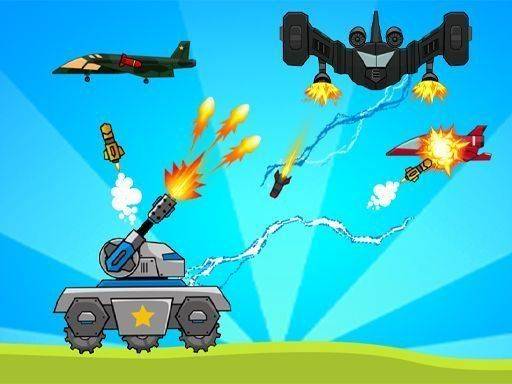
Players manage a single ground unit positioned in a fixed arena. The primary objective involves tracking enemy aircraft as they cross the sky, adjusting aim to land precise shots. Movement controls allow the unit to shift left or right, which becomes essential for avoiding incoming fire. Each wave presents a fresh set of aerial opponents that must be eliminated to progress. The loop of aiming, firing, and repositioning creates a rhythm that demands both accuracy and situational awareness.
Enemy Wave Structure
Enemy groups arrive in organized patterns. Early waves introduce slower aircraft that follow predictable paths, giving new players time to learn the controls. Later waves increase the number of opponents and introduce faster movement. Some enemies fire projectiles that track the player's position, requiring quick lateral movement. The mix of enemy types ensures that no two waves feel identical, and the gradual ramp in difficulty keeps the challenge fresh without becoming overwhelming.
Leader Encounters
Each stage concludes with a special opponent that is larger and more resilient than standard enemies. These leader aircraft possess unique attack patterns, often combining rapid fire with evasive maneuvers. Defeating them requires sustained focus and efficient use of the player's movement. The leader fights serve as a test of the skills developed during the preceding waves. Successfully completing one of these encounters provides a clear sense of accomplishment and signals readiness for the next stage.
Visual and Audio Design
The visual presentation is clean and functional, with a clear distinction between the player's ground unit and the airborne enemies. Color coding helps identify different enemy types at a glance. Sound effects provide immediate feedback for hits, misses, and incoming projectiles. The audio design reinforces the arcade feel, with distinct tones for successful eliminations and warnings for incoming attacks. This clarity helps players maintain focus during intense moments.
Difficulty Progression
The game's difficulty curve is carefully calibrated. Early stages serve as a tutorial, teaching the basics of aiming and movement. As players advance, the density of enemy waves increases, and the attack patterns become more varied. The leader enemies at the end of each stage act as gatekeepers, ensuring that only players who have mastered the current mechanics can proceed. This structure provides a satisfying sense of growth, as each new challenge feels earned rather than arbitrary.
Accessibility and Controls
The control scheme is straightforward, relying on mouse or touch input for aiming and firing. Keyboard shortcuts may also be available for movement. This simplicity makes the game approachable for players of all ages and skill levels. The lack of complex menus or tutorials means players can jump directly into the action. Despite the simple controls, the game offers depth through the need to balance offense and defense, making it easy to pick up but difficult to master.
Comments
0 comments