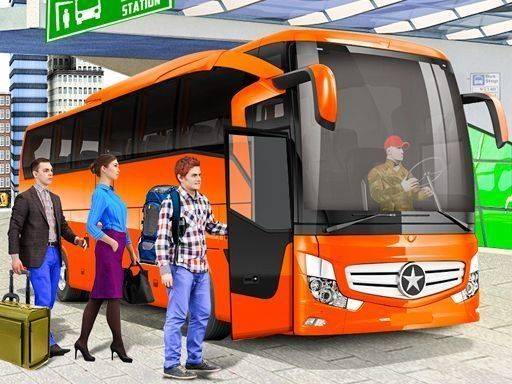
Urban Transit Bus Driver

Urban Transit Bus Driver

Developer: Nano Reapers Creations
Updated: 2026-10-01
Simulation Driving Transportation

Reviews

Urban Transit Bus Driver targets players who enjoy methodical driving and route planning rather than high-speed action. Its realistic physics and punctuality tracking create a clear skill loop, and the mix of city and highway maps adds variety. The game rewards patience and consistency, so those seeking arcade-style thrills may find it slow. For simulation fans, the feedback systems and gradual skill development provide a satisfying sense of progress.

About this game

Driving Physics and Bus Control

Urban Transit Bus Driver focuses on the physical behavior of a full-sized city bus. Acceleration, braking, and turning respond with weight and momentum, so drivers must modulate their inputs rather than rely on arcade-style reflexes. Speed management serves two purposes: obeying posted limits and keeping passengers comfortable. The control scheme includes on-screen prompts for new players, but the underlying simulation rewards those who refine smooth driving techniques over time.

Route Navigation and Traffic Awareness

Maps cover busy city streets and open highway stretches. Urban centers introduce tight corners and heavy traffic, while highway routes demand sustained attention over longer distances. Drivers learn to anticipate traffic patterns, identify landmarks, and plan their approach to each stop. Because route conditions vary, no two trips unfold in exactly the same way, which keeps navigation from becoming a routine task.

Passenger Service and Punctuality

The core objective is picking up and dropping off passengers at designated stops. The game tracks punctuality and safe driving, so efficient route planning and steady progress through traffic directly affect the outcome. Each trip functions as a small mission: arrive on time, avoid violations, and complete the route without compromising passenger comfort. This structure gives every journey a measurable purpose beyond simply reaching the destination.

Feedback and Skill Development

Visual cues such as traffic lights, road signs, and pedestrian crossings are clearly rendered to support quick decisions. The game provides notifications for traffic violations and successful stops, creating a feedback loop that reinforces habits like checking mirrors and signaling turns. As players practice across different maps, they develop timing and spatial awareness. The simulation rewards consistent, careful driving rather than speed, making gradual improvement the central measure of progress.

Editorial Notes

Compatibility

✅ Works on PC & Mobile | Recommended: Chrome / Safari / Edge

Faq

Does Urban Transit Bus Driver require prior bus driving experience?
No. The controls are designed to be intuitive, with on-screen prompts that help new players get started. The realistic physics model adds depth for those who want to master smooth driving, but the game does not assume existing knowledge of bus operation.
Can I drive on highways as well as city streets?
Yes. The game includes detailed maps that recreate both busy city streets and more open highway routes. Urban environments feature tight corners and heavy traffic, while highway sections involve longer stretches of open road with different driving conditions.
How does the game measure my performance?
Performance is tracked based on punctuality and safe driving. Arriving at stops on time and avoiding traffic violations both contribute to your results. Notifications appear for violations and successful stops, giving you clear feedback after each trip.
What happens if I drive too fast or brake abruptly?
The realistic physics model means aggressive driving affects passenger comfort. Speed management is necessary to stay within posted limits and keep passengers content. The game rewards consistent, careful driving rather than speed, so rough handling works against your performance.
Are the routes the same every time?
The game includes a selection of detailed maps, and each environment presents distinct driving conditions. Traffic patterns and route demands vary between urban centers and open highways, so trips do not feel identical even when you revisit the same map.
Is there a way to improve my driving skills over time?
Yes. Practicing on different maps helps you become familiar with various road layouts and traffic densities. The feedback loop, including violation notifications and stop confirmations, reinforces good habits like checking mirrors and signaling turns. Gradual skill building is central to the simulation.

Comments

0 comments
U
User
★ ★ ★ ★ ★
Loading comments...