
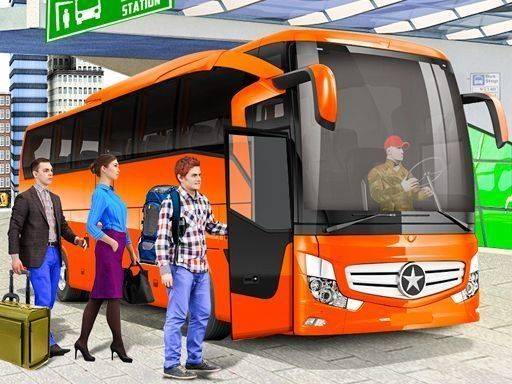
Driving Physics and Bus Control
Urban Transit Bus Driver focuses on the physical behavior of a full-sized city bus. Acceleration, braking, and turning respond with weight and momentum, so drivers must modulate their inputs rather than rely on arcade-style reflexes. Speed management serves two purposes: obeying posted limits and keeping passengers comfortable. The control scheme includes on-screen prompts for new players, but the underlying simulation rewards those who refine smooth driving techniques over time.
Route Navigation and Traffic Awareness
Maps cover busy city streets and open highway stretches. Urban centers introduce tight corners and heavy traffic, while highway routes demand sustained attention over longer distances. Drivers learn to anticipate traffic patterns, identify landmarks, and plan their approach to each stop. Because route conditions vary, no two trips unfold in exactly the same way, which keeps navigation from becoming a routine task.
Passenger Service and Punctuality
The core objective is picking up and dropping off passengers at designated stops. The game tracks punctuality and safe driving, so efficient route planning and steady progress through traffic directly affect the outcome. Each trip functions as a small mission: arrive on time, avoid violations, and complete the route without compromising passenger comfort. This structure gives every journey a measurable purpose beyond simply reaching the destination.
Feedback and Skill Development
Visual cues such as traffic lights, road signs, and pedestrian crossings are clearly rendered to support quick decisions. The game provides notifications for traffic violations and successful stops, creating a feedback loop that reinforces habits like checking mirrors and signaling turns. As players practice across different maps, they develop timing and spatial awareness. The simulation rewards consistent, careful driving rather than speed, making gradual improvement the central measure of progress.
Comments
0 comments