
One Encounter, One Goal
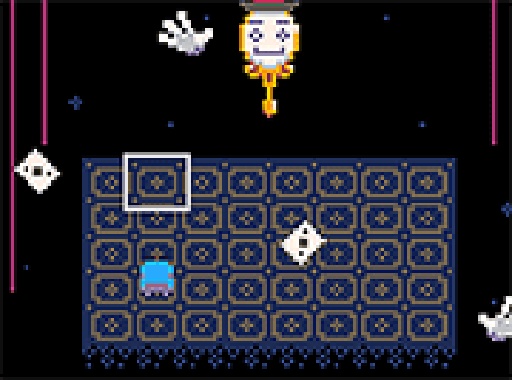
Chromatic Tile Duel strips the puzzle genre down to a single focused encounter. You control a character on a playfield, and your only objective is to collect every glowing tile scattered across it. A pixel opponent moves in unpredictable patterns, and each time its movements catch you, you lose one of your available hearts. The round ends when you either gather all the tiles or run out of hearts. That tight loop is the entire game, which means every second you spend on the field matters. There is no filler, no inventory management, and no story to sit through between attempts.
Timing, Space, and Risky Routes
What makes each round interesting is the tension between collecting quickly and staying safe. Tiles are spread across the playfield, and the opponent's movement is deliberately hard to read, so you cannot simply sprint to the nearest tile. You have to watch the opponent's position, judge how much space you have, and decide whether a tile is worth grabbing now or better left for a safer moment. The heart system reinforces this: hearts act as both a progress tracker and a risk-reward mechanic, so reckless speed costs you directly. Players who study the opponent's patterns over several rounds tend to find better routes and timing windows than those who react purely on instinct.
Pixel Visuals and Readable Feedback
The game uses colorful pixel graphics that stay easy on the eyes over long sessions. The opponent is drawn with a charming, non-threatening design, which keeps the tone relaxed even when the difficulty rises. Visual cues in the playfield help you anticipate movement patterns, and subtle sound effects confirm tile collection and near-misses, so you always know what just happened. Full-screen mode is available and improves immersion without pulling attention away from the tiles and the opponent.
Controls and Escalating Difficulty
Controls are intentionally minimal, using only keyboard or mouse input to navigate and collect tiles. There are no lengthy tutorials, so a new player can start within seconds. As you succeed, later rounds raise the difficulty by speeding up the opponent and arranging tiles in more complex layouts. Because the game runs in a browser, there is no download barrier, and it works on any modern device with an internet connection. The simple inputs and gentle visuals make it accessible to a wide range of ages and skill levels, while the pattern recognition and reflex demands keep it interesting for players who want a sharper challenge.
Comments
0 comments