
What You're Trying to Do
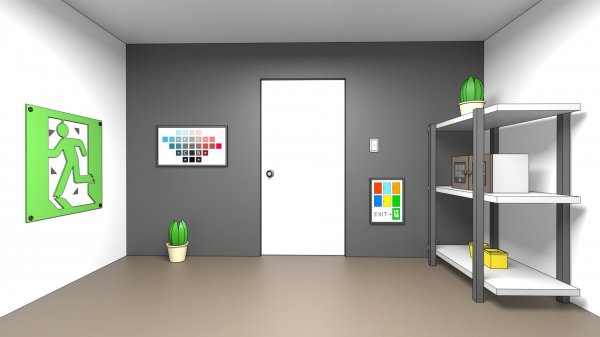
The goal in Colorful Room Escape Puzzle Game is straightforward: get out of a locked room. The door won't open until you solve a chain of color-based riddles. The room contains a desk, a shelf, an air conditioner, a safe, and the locked door itself. Each object hides a clue, and most clues relate to paint, shade, or pattern. Progress depends on observation rather than reflexes, which keeps the pace calm and methodical.
How Color Puzzles Work
Paint is the primary tool. You collect palettes, pencil holders, and paint tubes, then use them to solve puzzles such as painting a colorless door by studying how circles and squares are divided on a palette. Later challenges ask you to rotate color samples to match a sequence that runs from pale blue to dark blue, or to enter secret codes on digit-based locks. Rinsing objects in water may reveal hidden numbers, adjusting temperature controls can shift paint colors, and stencils can open new areas. Each solved puzzle yields an item that brings you closer to the exit.
Tools and Hidden Clues
Tools matter as much as color knowledge. Screwdrivers, stencils, and water each serve a specific purpose, and the game expects you to test them on objects that look ordinary at first. A pencil holder might conceal a number. An air conditioner's temperature setting might change how a paint sample reads. The design rewards patience: clues are tucked into everyday objects rather than announced with flashing prompts.
Difficulty and Audience
The learning curve is gentle. Early puzzles teach the color-matching logic, and later ones combine that logic with tools and codes. Because everything is logic-based and free from violent or mature content, the game suits children and adults alike. It works best for players who enjoy quiet deduction and don't mind taking notes on discovered codes or color orders.
Comments
0 comments