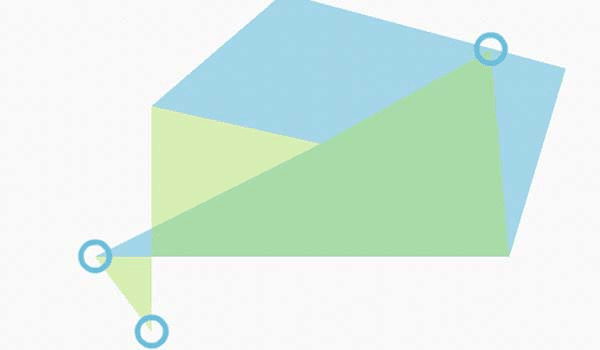
Tangleshapes Shape Puzzle

Tangleshapes Shape Puzzle

Developer: Branch Core Creations
Published: 1745164800
Updated: 2026-09-30
Logic Puzzle Physics

Reviews

Tangleshapes Shape Puzzle focuses on one mechanic and executes it without unnecessary distractions. Sliding, stretching, and rotating pieces into outlines is simple to understand but becomes genuinely challenging as layouts grow more complex. The lack of timers and penalties creates a low-pressure environment that suits players who enjoy logic puzzles and spatial reasoning. Clean graphics and responsive drag controls support precise manipulation. The main limitation is that the game offers no narrative or competitive elements, so it appeals most to players seeking a quiet, methodical challenge rather than action or progression systems.

About this game

Fitting Shapes Without a Clock

Tangleshapes Shape Puzzle is built around a single, clear task: move each piece into its matching outline. Pieces can be slid, stretched, and rotated, and the puzzle is solved only when every shape aligns with the target. The absence of a timer changes how you approach each board. You can pause, reconsider, and test a placement without losing progress. That design choice makes the game feel more like a logic exercise than a reflex test.

Reading the Outlines

The outlines are the main source of information. Before touching a piece, studying the target shape tells you which edges need to meet and where a stretch is likely required. Larger or more distinctive pieces often anchor the layout, while smaller pieces fill the remaining gaps. Because the game provides clear visual feedback when a piece is correctly placed, you always know whether a decision worked. That feedback loop encourages methodical experimentation rather than random dragging.

Progression and Difficulty

Puzzles start simple and become more complex over time. Early boards may need only one or two adjustments, while later ones demand closer attention to how pieces connect and rotate. The difficulty curve is steady rather than sudden, so the game remains approachable for players who are new to spatial puzzles. There are no penalties for mistakes, which means a wrong placement costs nothing but time. That structure supports repeated attempts and makes the game suitable for short sessions or longer, unhurried play.

Controls and Accessibility

Interaction is handled through click-and-drag or tap-and-drag, depending on your device. The controls are described as smooth and responsive, which matters when a piece needs precise positioning. The game runs in a web browser, requires no download, and is free to play. Clean, simple graphics keep attention on the shapes rather than on decorative elements. That combination makes Tangleshapes Shape Puzzle accessible on both desktop and mobile without asking players to learn a complex interface.

Editorial Notes

Compatibility

๐Ÿ’ป Desktop | ๐Ÿ“ฑ Mobile | ๐Ÿ“Ÿ Tablet
โ€“ All supported ยท Best with Chrome or Safari

Faq

Is Tangleshapes Shape Puzzle free to play?
Yes. The game is free to play and runs directly in a web browser. There is no download or installation required, so you can start a puzzle immediately after opening the page. This makes it easy to try the game without committing to a store purchase or a lengthy setup process.
Does Tangleshapes Shape Puzzle work on mobile devices?
The game is designed to work on both desktop and mobile. Controls use click-and-drag or tap-and-drag, and the drag-and-drop system is described as optimized for touch screens. Because it runs in a browser, you can play on a phone or tablet without installing a separate app.
Are there timers or penalties for wrong moves?
No. Tangleshapes Shape Puzzle has no time limits and no penalties for mistakes. You can take as long as you need on each puzzle and try different placements without losing progress. This design supports a calm, stress-free approach and encourages experimentation rather than rushed decisions.
What skills does Tangleshapes Shape Puzzle help improve?
The game emphasizes logical thinking and spatial reasoning. You must observe how shapes connect, judge which piece fits a given outline, and decide when to slide, stretch, or rotate a piece. Regular play can help improve problem-solving skills because each puzzle asks you to plan a sequence of adjustments rather than guess randomly.
How does the difficulty change as you progress?
Puzzles begin with simpler arrangements and gradually increase in complexity. Later boards require greater attention to detail and more careful observation of how pieces relate to one another. The progression is steady, so players can build familiarity with the core mechanic before facing more demanding layouts.
What is the best way to start a difficult puzzle?
Study the outline before moving anything, then place larger or more distinct pieces first. These often define the overall structure and make it easier to see where smaller pieces belong. If you get stuck, step back and look at the whole shape from a different perspective. There is no rush, so take your time.

Comments

0 comments
U
User
★ ★ ★ ★ ★
Loading comments...