
What You Actually Do
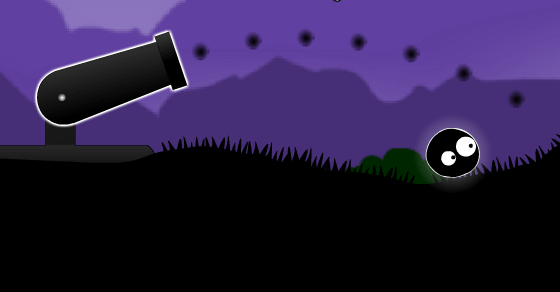
Each screen in Bloopers presents a fixed arrangement of light bulbs and obstacles. You control a cannon, aim it with your mouse or finger, and fire a Blooper ball. The ball flies, bounces, and rolls according to the game's physics. The level is cleared only when every bulb has been smashed. Because bulbs sit in different spots and obstacles block direct lines, you often need bank shots off walls or platforms rather than a straight launch. The cannon does not move, so the whole puzzle is about angle and timing.
How Ninja Balls Change the Puzzle
As you progress, exploding ninja balls appear on the field. These bounce around on their own and can disrupt a shot you have already lined up. They add a moving hazard that turns some levels from pure aiming into timing problems: you may need to wait for a ninja ball to clear a path before firing. The game does not explain every interaction upfront, so part of the challenge is reading how a ninja ball's bounce pattern affects your available angles.
Difficulty and Progression
The opening levels are simple enough for a child to clear with a few tries. Later arrangements stack more bulbs, tighter angles, and ninja balls together, so the same basic mechanic becomes a test of planning. There are no upgrades, timers, or lives mentioned. Progress is measured by clearing screens, and the difficulty curve is the main source of variety rather than new mechanics. That keeps the game easy to pick up but means the challenge comes from level design, not from new tools.
Who It Suits
Bloopers is built for short sessions. It runs in a browser with no download or sign-up, and the content is deliberately non-violent, which makes it reasonable for family play. Players who enjoy angle-based puzzles like artillery games will recognize the core loop. Anyone looking for a story, character progression, or competitive modes will not find them here, because the input does not describe those features.
Comments
0 comments