
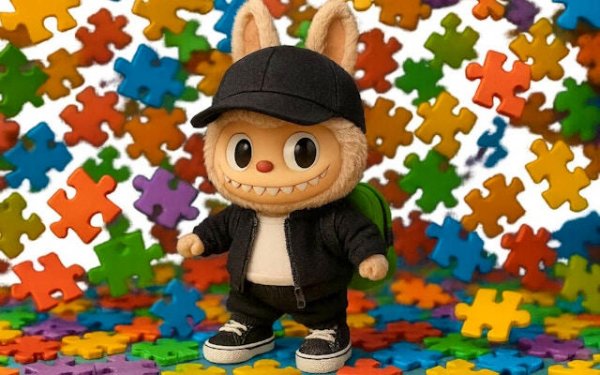
Matching Pieces to Pictures
Each session starts in a gallery of friendly animal characters. After a child selects an image, it breaks into several sections that scatter across the screen. Using a finger or mouse, the child drags each section toward its matching spot on the board. A correct placement locks the piece into position with a soft visual cue. That single loop—choose, drag, place, confirm—is the whole activity, and it is designed to keep attention on observation rather than speed.
No Timers, No Pressure
The game deliberately avoids timers, scores, and penalties. Children can spend as long as they need on any picture, which removes the frustration that often accompanies early puzzle play. Large, clearly defined interaction areas mean small fingers can still grab and move pieces without precise aiming. This makes the experience suitable for beginners who are still developing hand-eye coordination, and it lets them set their own pace.
Bright Visuals and Gentle Audio
Puzzles use bright, saturated colors and rounded character designs aimed at young audiences. When a piece is correctly placed, a pleasant sound acknowledges the action. The overall layout is clean and uncluttered, with no distracting animations or pop-ups. That restraint matters: fewer competing elements mean a child is more likely to stay focused on the puzzle itself rather than chasing visual noise.
Puzzle Difficulty That Grows
The collection includes puzzles with varying numbers of pieces. Simpler puzzles use larger pieces and fewer total sections, which suits toddlers. More complex puzzles contain smaller pieces and demand greater attention to detail. Because the difficulty range is built into the puzzle selection rather than gated behind progression, the game can grow with a child and offer a fitting challenge at different developmental stages.
Safe, Independent Play
The environment contains no advertisements, external links, or in-app purchases. Once the game is opened, children can explore freely without encountering inappropriate content. That design supports independent play and gives parents confidence that the activity is secure. It also means there is nothing to buy, nothing to click away from, and no interruptions to the puzzle loop.
Comments
0 comments