Optika Light Logic Puzzle

Optika Light Logic Puzzle

Developer: Country Studio
Published: 1744214400
Updated: 2026-09-30
Logic Science Puzzle

Reviews

Optika stands out for making optical physics the actual puzzle mechanic rather than a cosmetic theme. Rotating mirrors and splitting beams with prisms feels intuitive, and the lack of timers or penalties keeps the experience relaxed. The gradual introduction of new devices supports steady learning, though players seeking fast action or competitive scoring will find it too slow. It is best suited to casual puzzlers, families, and anyone curious about light behavior.

About this game

Directing Light with Mirrors and Prisms

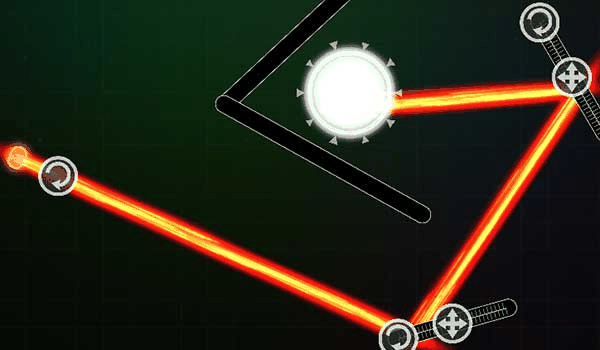
Each puzzle in Optika presents a laser source, one or more glowing targets, and a set of adjustable devices placed between them. The goal is simple to state: get the beam to every target. What makes it interesting is how light behaves. Mirrors change the beam's direction, prisms split it into multiple paths, and other tools alter its route in ways that reflect real optical principles. You click or tap a device to rotate or reposition it, then watch how the beam responds. [IMG_1]

Experimenting Without Penalty

There is no timer and no failure state. You can adjust any device as many times as you like, trying different angles and configurations until the beam reaches all targets. This trial-and-error approach is central to the design: it lets you learn how each device affects the laser by observing the results directly. If a layout stumps you, a hint system is available, though using it is optional. The controls work smoothly on both desktop and mobile, so the focus stays on the puzzle rather than the interface. [IMG_2]

Gradual Complexity and New Devices

Early puzzles introduce one or two device types in simple arrangements, giving you room to understand how mirrors redirect a beam or how a prism splits it. As you progress, new devices appear and layouts become more intricate, requiring you to plan multi-step paths and account for how one adjustment affects the entire beam route. The difficulty curve is steady rather than steep, making the game accessible to younger players and casual puzzlers while still offering a mental workout for adults. [IMG_3]

Who It Suits

Optika works well for anyone who enjoys logic puzzles that reward careful observation and spatial reasoning. The science theme is genuine—reflection and refraction are the core mechanics, not just decoration—so it can double as a light introduction to optical concepts. Because there is no violence, no time pressure, and no penalty for mistakes, it is also a comfortable choice for family play or a relaxed solo session.

Editorial Notes

Compatibility

✅ Works on PC & Mobile | Recommended: Chrome / Safari / Edge

Faq

Is Optika suitable for children?
Yes. The game has no violence, no time limits, and no penalty for wrong moves. Its educational focus on light reflection and refraction makes it appropriate for younger players, though some later puzzles may require adult help due to increased complexity.
Do I need to know physics to play Optika?
No prior physics knowledge is required. The game teaches through experimentation—you adjust devices and see how the beam reacts. Concepts like reflection and refraction become intuitive as you play, rather than being explained in advance.
Can I play Optika on my phone?
Yes. The controls are designed for both desktop and mobile, using click or tap interactions to rotate and reposition devices. The interface is described as smooth and responsive across both platforms.
What happens if I get stuck on a puzzle?
Optika includes a hint system that you can use whenever you feel stuck. There is no penalty for using hints, and you can continue adjusting devices freely until the beam reaches all targets.
Is there a time limit or score in Optika?
No time limit or scoring system is mentioned. The game encourages unhurried experimentation, letting you adjust devices as many times as needed. Progress comes from solving puzzles, not from speed or efficiency.
What devices can I use to guide the laser?
The core tools are mirrors, which change the beam's direction, and prisms, which split light into multiple paths. Additional devices appear as you progress, each adding new ways to redirect or manipulate the laser.

Comments

0 comments
U
User
★ ★ ★ ★ ★
Loading comments...