Particle Play: Sandbox Simulation

Particle Play: Sandbox Simulation

Developer: Ascend Current Labs
Updated: 2026-07-20
Pixel Art Simulation Creative Building
Advertisement

Reviews

Particle Play: Sandbox Simulation succeeds as a digital stress reliever. Its efficient processing allows for complex builds without lag, and the water physics feel genuinely responsive. The lack of objectives is a strength, letting you focus on pure experimentation. While experienced sim fans might want more material types, the core loop of piling and channeling remains satisfying for hours.

About this game

Core Concept & Atmosphere

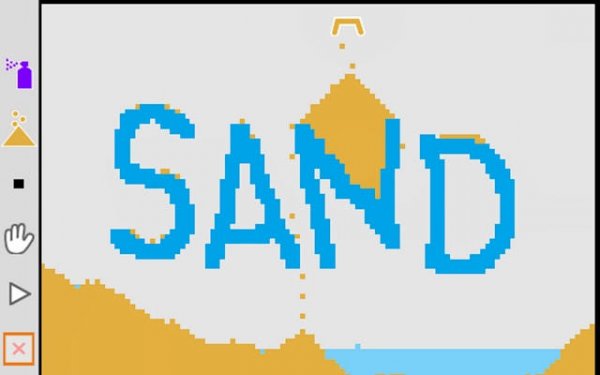
Particle Play: Sandbox Simulation offers a meditative experience centered on manipulating tiny pixel elements. The game strips away traditional gaming structures like scores or timers, leaving only the pure act of creation and observation. This design choice fosters a relaxed environment where players can experiment without pressure. The visual style, built from simple colored squares, evokes a nostalgic charm reminiscent of early computer graphics while maintaining a clean, uncluttered interface.

Interactive Particle System

The simulation focuses on two primary materials: a granular solid and a flowing liquid. Players can deposit, remove, and shift these particles using intuitive cursor or touch controls. The solid material behaves like loose earth, forming piles and slopes. The liquid responds to gravity, spreading across surfaces, filling depressions, and being absorbed by the solid material. This interaction creates a dynamic system where small changes can lead to unexpected results, encouraging playful exploration.

Performance & Technical Design

A key feature of this simulation is its efficient processing system. The software intelligently focuses computational resources only on particles that are actively moving or changing state. This means that large, stable structures require minimal processing power, allowing for complex and extensive creations without significant slowdown. The result is a smooth and responsive experience even when the screen is filled with many active elements, making the simulation accessible on a wide range of devices.

Creative Possibilities & Player Experience

The open-ended nature of the simulation invites a variety of creative approaches. Some players might build intricate landscapes with layered terrain and winding rivers. Others may focus on the simple, calming act of watching liquid flow and pool. The lack of predefined goals means each session is unique, driven purely by personal curiosity. This makes the game suitable for short breaks or extended periods of focused relaxation, offering a digital space for unstructured play.

Compatibility

▸ Desktop: Chrome / Edge / Firefox / Safari
▸ Mobile: iOS Safari / Android Chrome
▸ Tablet: iPadOS Safari / Android Tablet Browser
Keep your browser updated for the best experience

Faq

Is Particle Play: Sandbox Simulation free to use?
Yes, the simulation is available as a free online experience. You can access it directly through a web browser without any purchase or subscription required, making it easy to start playing immediately.
Can I save my creations in the sandbox?
The core experience focuses on real-time interaction rather than saving specific builds. While the game may not include a save feature, its simplicity allows you to recreate interesting patterns quickly once you understand the particle behavior.
What devices support this pixel simulation?
The simulation runs in a standard web browser, making it compatible with most desktop and laptop computers. It also works on tablets and smartphones with touchscreens, though performance on very small screens may vary.
How does the water physics differ from the sand?
Water particles flow freely, seeking the lowest point and spreading out to form pools. Sand particles stack and hold their shape, allowing you to build structures. Their interaction creates realistic effects like erosion and absorption.
Are there any updates planned for this game?
The developers have previously added dynamic water physics to enhance realism. While specific future updates are not guaranteed, the game's design suggests potential for new particle types or interactive tools based on community interest.
Is this simulation suitable for children?
Yes, the content is family-friendly with no violence, ads, or inappropriate material. The simple controls and open-ended play make it accessible for children, while the physics mechanics offer enough depth to engage older players.

Comments

0 comments
U
User
Loading comments...