Urban Parking Challenge

Urban Parking Challenge

Developer: Space Pixel Core
Updated: 2026-10-01
Parking Simulation Puzzle Driving Casual Strategy

Reviews

Urban Parking Challenge succeeds by removing timers and opponents, letting players concentrate on alignment and spatial reasoning. Early levels teach control, while later stages add angled spots and moving traffic that demand planning. The smooth difficulty curve keeps frustration low. Its main limitation is that players seeking action or competition will find it too quiet. Best for those who enjoy methodical puzzles and short, focused sessions.

About this game

Puzzle Driving, Not Racing

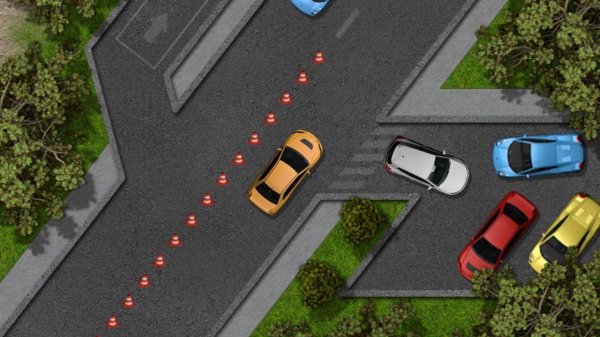
Urban Parking Challenge treats parking as a spatial puzzle rather than a speed test. The goal is simple: guide a vehicle into a clearly outlined spot without hitting obstacles or leaving the road. Other cars, barriers, and road edges turn each stage into a problem of alignment and timing. Because there is no timer or opponent, the pressure comes from precision, not urgency. Gentle steering and braking inputs matter more than quick reflexes.

How the Stages Teach You

Early levels give generous space and straight-line parking to establish basic control. Later layouts tighten the gaps, angle the spots, and add moving traffic that forces you to think several moves ahead. The difficulty curve stays smooth, so frustration remains low while the sense of accomplishment grows. Each stage presents a distinct arrangement, meaning you cannot rely on one memorized approach. Reversing, aligning, and adjusting become the core skills you build over time.

Controls and Feedback

On-screen controls are responsive and intuitive, designed for light inputs. Overshooting the target is the main risk, which encourages a methodical approach. Visual cues such as highlighted parking lines and proximity warnings help you gauge your position. Collisions or leaving the road may reset the level, reinforcing patience and precision. This feedback loop keeps the focus on spatial judgment rather than trial-and-error speed.

Progression Without Pressure

Successfully parking earns points and unlocks new challenges. The progression system introduces fresh environments and obstacle configurations, keeping the gameplay varied. There is no time limit or score multiplier, so players can concentrate entirely on the task. This relaxed pace suits short play sessions or longer, focused practice. The real reward is improving your spatial judgment, not chasing a high score.

Editorial Notes

Compatibility

▸ Desktop: Chrome / Edge / Firefox / Safari
▸ Mobile: iOS Safari / Android Chrome
▸ Tablet: iPadOS Safari / Android Tablet Browser
Keep your browser updated for the best experience

Faq

Does Urban Parking Challenge have a time limit or score multiplier?
No. The game deliberately removes timers and score multipliers so players can focus on precision. You earn points for successful parking, but there is no clock forcing quick decisions. This design makes it suitable for relaxed play and methodical problem-solving.
What kind of obstacles appear in Urban Parking Challenge?
Stages include other cars, barriers, and road edges that constrain your path. Later levels add moving traffic and angled parking spots. These obstacles require you to plan several moves ahead and use gentle steering and braking to avoid resetting the level.
Is Urban Parking Challenge suitable for children or casual players?
Yes. The game is tagged as a family game and casual strategy. Early levels teach basic control with generous spaces, and the difficulty curve stays smooth. There is no combat or time pressure, making it accessible to younger players and anyone new to driving puzzles.
What happens if I collide with an obstacle or leave the road?
Collisions or leaving the road may reset the level. This feedback encourages a careful, methodical approach rather than rushing. Since there is no timer, a reset costs only the time you spent on that attempt, not a score or life.
How does Urban Parking Challenge differ from other parking games?
It emphasizes spatial puzzles over speed or simulation detail. The focus is on careful maneuvering, visual cues, and gradual complexity. There are no opponents or timers, so the challenge comes from reading each layout and executing precise inputs.
Can I play Urban Parking Challenge in short sessions?
Yes. The relaxed pace and lack of time limits make it easy to play for a few minutes or longer. Each stage is self-contained, so you can attempt one puzzle or practice several without losing progress or feeling rushed.

Comments

0 comments
U
User
★ ★ ★ ★ ★
Loading comments...