
The Core Timing Loop
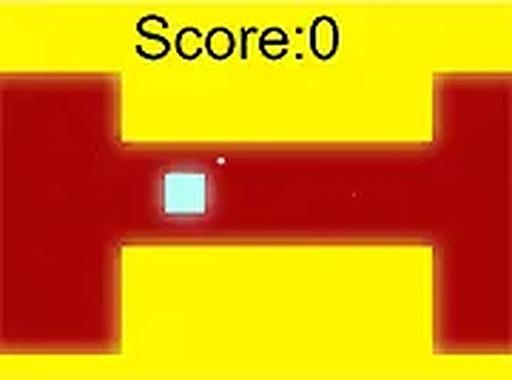
Vertical Leap Precision Runner reduces its design to one repeated action: making a block ascend at the correct moment. The block drifts downward on its own, so the player taps or clicks to push it back up. Walls slide into view with a single gap, and the block must pass through that opening. There are no power-ups, collectibles, or alternate routes—success depends entirely on reading the wall's position and reacting instantly.
How Difficulty Escalates
Early passes move at a comfortable pace, giving newcomers room to learn the controls. After a few successful gaps, the speed increases noticeably. That gradual ramp-up lets muscle memory form before the pace becomes demanding. From there, the difficulty keeps climbing, so even experienced players must maintain steady focus. Sessions stay short but intense, which suits quick mental breaks rather than long play periods.
Minimal Visuals, Maximum Focus
The presentation is deliberately spare. A clean background, a simple block, and moving walls are the only on-screen elements. That lack of clutter keeps attention on the timing task. The color palette is soft and non-distracting, which reduces eye strain during repeated attempts. Full-screen mode removes browser chrome, creating an immersive but still simple view.
Input Response and Session Structure
Input lag is virtually nonexistent. Each tap or click produces an immediate upward movement, which matters in a game where milliseconds decide the outcome. Touchscreens and mouse clicks work equally well, so the experience stays consistent across devices. There is no acceleration or delay in the block's response. Each attempt lasts only as long as the player avoids a collision, and after a mistake the game resets immediately. No lives, continues, or checkpoints exist—just a single continuous run that encourages another try.
Comments
0 comments