Princess Rescue Logic Puzzle

Princess Rescue Logic Puzzle

Developer: Axe Core Creations
Published: 1708704000
Updated: 2026-09-30
Logic Puzzle Strategy

Reviews

Princess Rescue Logic Puzzle delivers exactly what its name suggests: a grid-based logic challenge with a positive theme and no time pressure. The mix of cakes and blocks gives players two distinct tools for shaping routes, and the gradual increase in obstacle complexity keeps the experience from feeling repetitive. Its main limitation is that the premise stays simple throughout, so players seeking fast-paced or action-oriented puzzles may find it too relaxed. For families and casual logic fans, the patient design is the point.

About this game

Building Routes with Cakes and Blocks

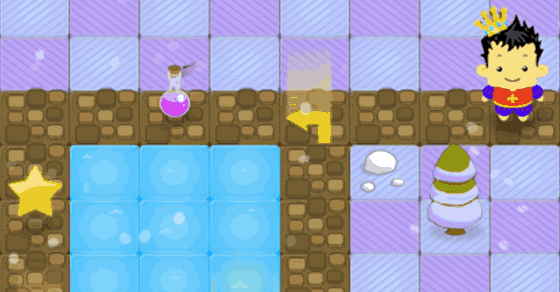
The core task in Princess Rescue Logic Puzzle is straightforward: arrange items on a maze grid so a brave character can travel from a starting point to the princess. Cakes and blocks are the two main tools. Blocks fill gaps or redirect movement, while cakes mark the intended path. Every placement changes the available route, so a single misplaced item can leave the character stuck. The challenge comes from reading the maze layout before acting, not from reacting quickly.

No Timers, No Pressure

There is no countdown or time limit. Players can study the grid, test a placement, and rethink the approach without penalty. That design choice makes the game approachable for younger children and for anyone who prefers to solve puzzles at a measured pace. Difficulty rises through more intricate obstacle arrangements rather than through speed requirements, so the pressure stays intellectual rather than reflexive.

Progression Through Obstacle Variety

Early puzzles keep the grid relatively open and the solution easy to spot. As players advance, new obstacles appear that demand different placement strategies. A method that worked in one level may fail in the next, which encourages players to reassess rather than repeat a fixed pattern. The gradual increase in complexity is meant to keep the game challenging without becoming frustrating, and the family-friendly theme stays consistent throughout.

Who This Puzzle Suits

Princess Rescue Logic Puzzle fits players who enjoy spatial reasoning and patient planning. The drag-and-drop controls are simple enough for young players, while the later puzzles offer enough depth for adults. Because the content is positive and contains no inappropriate material, it works well as a shared activity for families. Anyone looking for a calm, logic-driven puzzle with a gentle learning curve will find the structure familiar and the difficulty curve reasonable.

Editorial Notes

Compatibility

Play on Any Device | Chrome / Safari / Edge Recommended

Faq

What is the main goal in Princess Rescue Logic Puzzle?
The goal is to move a brave character from the starting position to the princess by placing cakes and blocks on the maze grid. Each item you place affects the route, so the puzzle is solved by arranging a clear, continuous path rather than by controlling the character directly.
Do I need fast reflexes to play Princess Rescue Logic Puzzle?
No. The game has no time pressure, so you can take as long as you need on each puzzle. Success depends on planning and spatial reasoning, not on quick reactions. That makes it suitable for players who prefer to think through a solution carefully before committing to it.
Is Princess Rescue Logic Puzzle suitable for young children?
The game is designed to be family-friendly, with simple drag-and-drop controls and a positive theme. Early levels are accessible to young players, and the difficulty increases gradually. Because there is no timer, children can experiment and learn from mistakes without the stress of a countdown.
What is the difference between cakes and blocks in the game?
Cakes and blocks serve different roles in path building. Blocks are used to fill gaps or shape the route, while cakes guide the brave character in the right direction. Using each piece wisely matters because every placement changes the available path, and a poor choice can create a dead end.
How does the difficulty change as I progress?
Later puzzles introduce new obstacles that require fresh strategies. The grid layouts become more complex, and solutions that worked earlier may no longer apply. The increase is gradual, so players build logical thinking and spatial awareness step by step instead of facing a sudden spike in difficulty.
What should I do if I get stuck on a puzzle?
Try a different approach. Sometimes the simplest solution works best, so step back and look for an alternative route. Observing the maze layout and identifying potential dead ends before placing items can help. Practicing regularly also improves logical thinking and makes future puzzles easier to read.

Comments

0 comments
U
User
★ ★ ★ ★ ★
Loading comments...