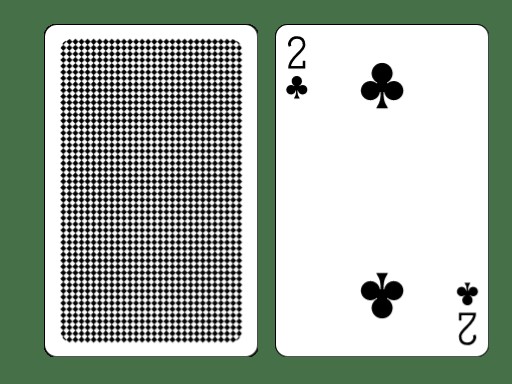
Klondike Solitaire One Card Draw

Klondike Solitaire One Card Draw

Developer: Wire Nova Digital
Published: 1716134400
Updated: 2026-10-01
Card Puzzle Solitaire

Reviews

Klondike Solitaire One Card Draw sticks to the familiar rules but slows the stockpile reveal to one card at a time. That change rewards planning over speed, and the undo button lets you test sequences without committing. The clean interface and smooth animations keep attention on the cards. It suits players who prefer a measured puzzle session rather than a frantic race, though those wanting faster cycles may find the pace too gentle.

About this game

Objective and Foundation Building

Your goal in Klondike Solitaire One Card Draw is to move every card to the four foundation piles. Foundations build upward by suit, starting with the Ace and ending with the King. Until a foundation is started, its Ace remains somewhere in the tableau or stockpile, so locating and freeing Aces early shapes the entire session.

Tableau Layout and Card Movement

The game opens with seven tableau columns. The first column holds one face-up card, and each subsequent column contains an increasing number of face-down cards beneath a single face-up card. You build descending sequences of alternating colors on the tableau—for example, a red six onto a black seven. Any face-up card or valid sequence can be moved between columns. When a face-down card is uncovered, it flips face-up, opening new possibilities.

The One-Card Draw Difference

Unlike versions that deal three cards at a time from the stockpile, this variant reveals just one card per draw. That single-card pace gives you more control over which stockpile cards enter play, but it also means fewer chances to cycle through the deck quickly. Each draw becomes a deliberate decision: use the card immediately, hold it in mind for a future sequence, or continue drawing to reach a more useful card.

Undo and Strategic Planning

An undo button lets you reverse moves without penalty, which turns the game into a low-risk environment for testing sequences. You can try a placement, see how it affects the tableau, and undo if it blocks a better option. This feature supports pattern recognition and forward planning, two skills that carry over between sessions. The game ends when all cards reach the foundations, and the interface keeps animations smooth so the focus stays on card placement.

Editorial Notes

Compatibility

💻 Desktop | 📱 Mobile | 📟 Tablet
– All supported · Best with Chrome or Safari

Faq

What does 'one card draw' mean in Klondike Solitaire One Card Draw?
It means you turn over a single card from the stockpile at a time, rather than drawing three. This slower reveal gives you more control over which cards become available, but it also reduces the number of full passes through the deck compared to three-card draw variants.
Can I move cards between tableau columns in Klondike Solitaire One Card Draw?
Yes. You can move any face-up card or valid descending alternating-color sequence onto another tableau column. Moving cards is often necessary to reveal face-down cards underneath, which is a key part of progressing toward the foundations.
What happens when I uncover a face-down card?
When the last card covering a face-down card is moved away, that card flips face-up automatically. It then becomes available for building sequences or moving to a foundation if it is an Ace or the next needed rank.
Is there a time limit or penalty for using undo?
The description does not mention a time limit or any penalty for undo. The undo button is presented as a strategic tool for experimenting with different moves, so you can refine your approach without losing progress or facing a score reduction.
How do I know when I have won Klondike Solitaire One Card Draw?
You win when all cards have been moved to the four foundation piles, sorted by suit from Ace to King. At that point no cards remain in the tableau or stockpile, and the game ends.
Is Klondike Solitaire One Card Draw suitable for beginners?
The game is described as suitable for players of all ages who enjoy strategic card play. The one-card draw and undo option make it more forgiving than faster variants, so beginners can learn the rules while experienced players can still plan ahead.

Comments

0 comments
U
User
★ ★ ★ ★ ★
Loading comments...